Observations of real-life driving behavior enables researchers to recommend life-saving strategies
People do about as much while driving their cars as they do while sitting in their living rooms – eating, reading, talking on the phone. Some of these activities qualify as risky behavior. Dial your phone while watching TV and you may miss a weather alert. Dial while driving and you may crash.
Research published in Ergonomics and Design reveals the crash risk of various activities based on observations of drivers in instrumented vehicles. Even the researchers were amazed by the magnitude of the increase in risk. "Taking your eyes off the road to dial a cell phone or look up an address and send a text increases the risk of crashing by 600 to 2,300 percent," said Rich Hanowski, director of the Center for Truck and Bus Safety at the Virginia Tech Transportation Institute.
The paper, "Estimating Crash Risk," by Tom Dingus, director of the transportation institute; Hanowski,; and Charlie Klauer, research scientist at the transportation institute, has just received the Human Factors and Ergonomics Society’s 2012 Best Ergonomics in Design Article Award, to be presented at the society's annual meeting, Oct. 22-26, in Boston.
Asserting that driver behavior and performance needs to be understood in the context of the driving environment, the researchers used the results of several naturalistic driving studies. Traditional driver studies have been done on test tracks or with simulators, or have been based on crash studies based on interviews where "drivers and other eyewitnesses are deceased, dazed, inattentive, or fearful," according to the research article.
"Naturalistic driving research involves the instrumentation of vehicles, including video cameras, for the purpose of precisely recording participants as they normally drive as well as in the seconds leading up to crashes and near-crashes," the article explains. Continuous data are collected for as long as two years.
"Near crashes" contain all the elements of a crash except the outcome, which is averted by successful last-second maneuvers.
The researchers observed that the most dangerous tasks are visual-manual in nature. "You have to take your eyes off of the road to do something," said Dingus. "Most of the tasks require multiple steps to complete and multiple glances away from the road."
The tasks are also rarely associated with built in features that come as original equipment of the car or truck.
"The tasks that we should focus heavily on correcting are the newer cell phone tasks of texting, typing, reading, dialing, and reaching for a phone," Klauer said.
The researchers conclude with these recommendations:
- Vehicle manufacturers and aftermarket suppliers need to focus on minimizing visual-manual interaction with devices and thereby minimizing eyes-off-road time. The article suggests interfaces that lock out features while the vehicle is in motion as well as the use of auditory or voice interfaces.
- Manufacturers of nomadic devices should integrate via Bluetooth or wireless to interact seamlessly with an in-vehicle interface that has the features in the first item, or that simply lock out all the most complex features while a vehicle is in motion (as detected by GPS).
- The public needs to be informed of the relative risks of the various tasks that are commonly accomplished in a moving vehicle.
Regarding legislation, the researchers wrote that "Texting bans are appropriate (and) handheld cell phone bans – particularly as applied to smartphones – may be necessary." However, "Total cell phone bans that include true hands-free voice input-output devices are unwarranted," the transportation research team said.
"Other devices, such as mobile data terminals in trucks, need to be seriously and immediately assessed from design, education, and legislative viewpoints," Hanowski said.
Written by Susan Trulove.
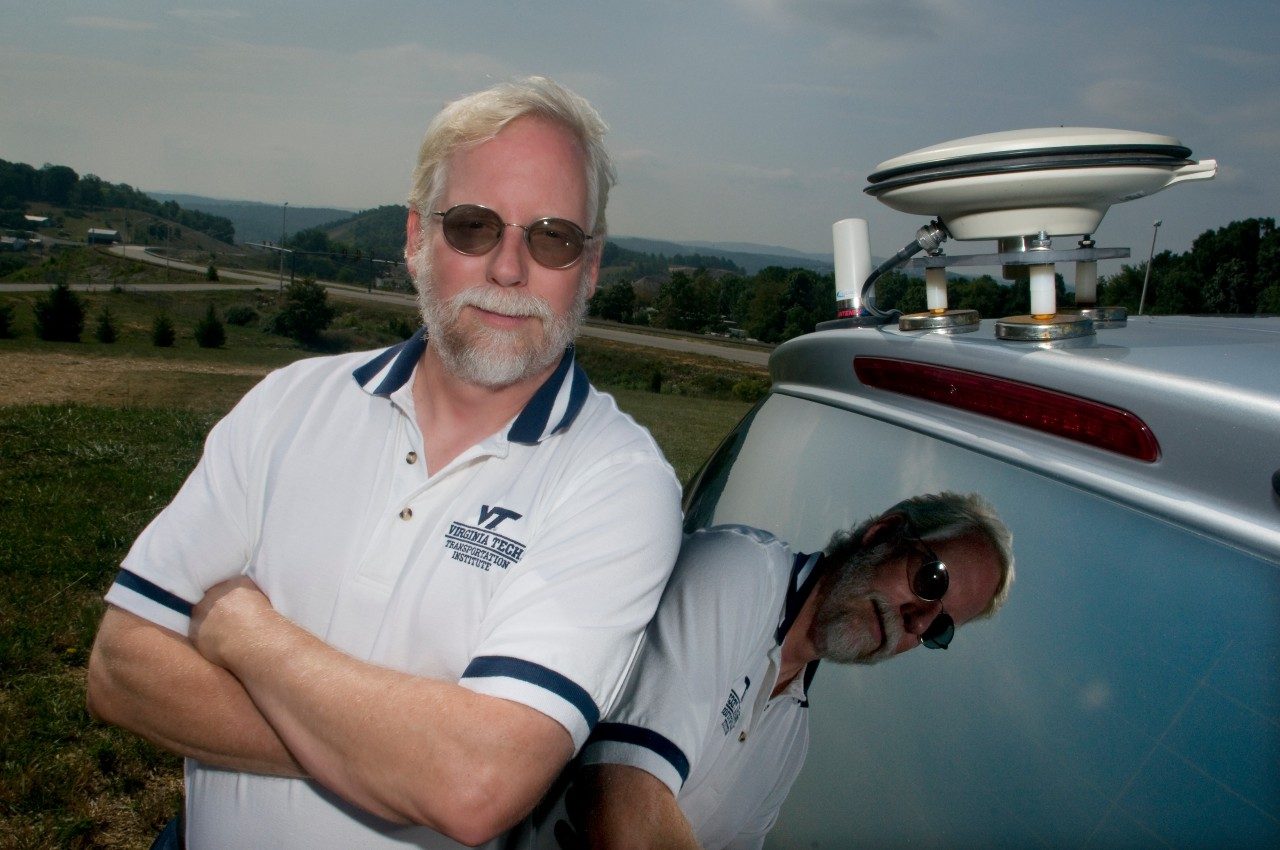
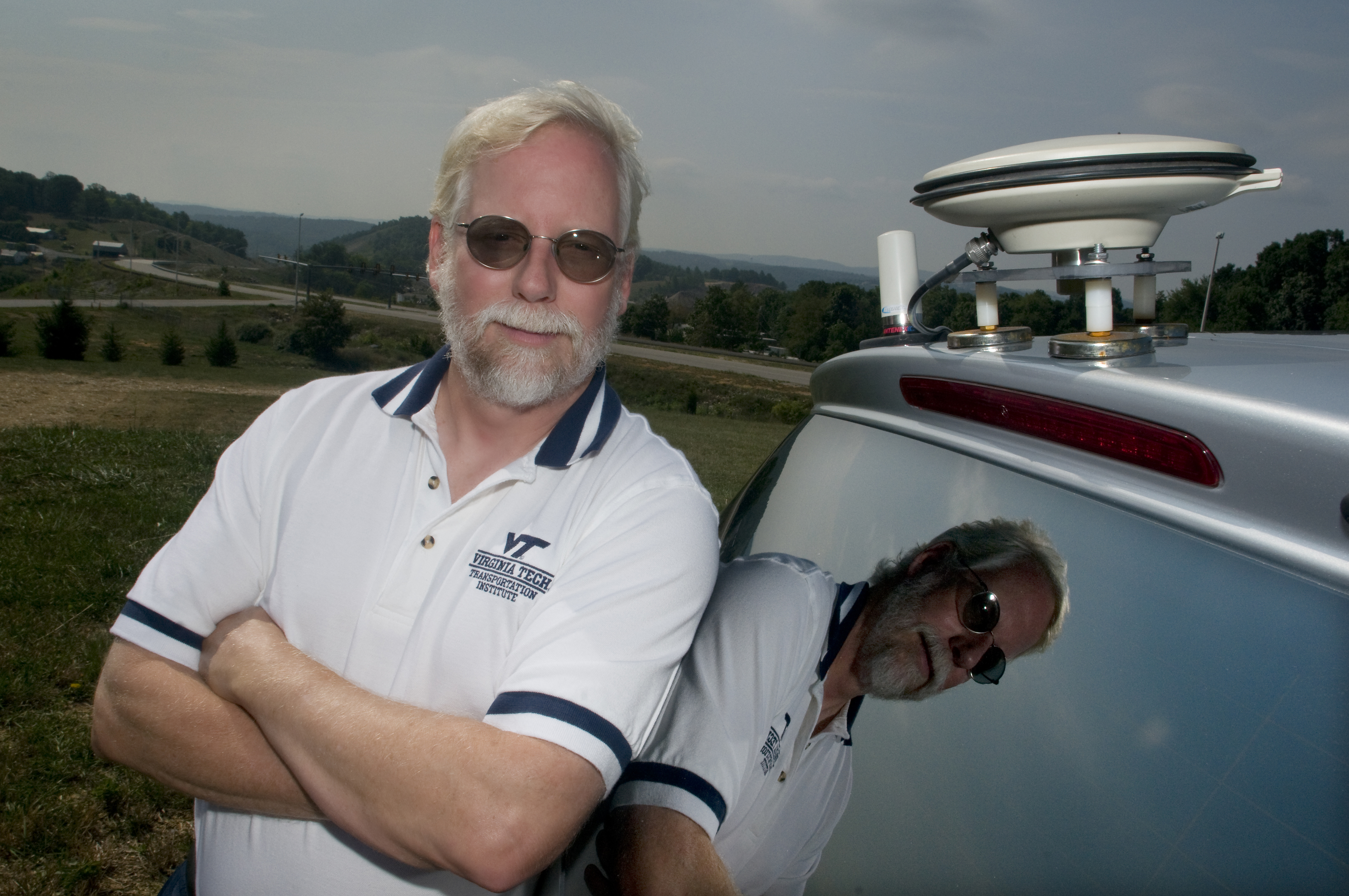
Tom Dingus with instrumented vehicle
Tom Dingus, director of the Virginia Tech Transportation Institute, stands with an instrmented vehicle. Photo by Jim Stroup.