University publishes Stroubles Creek watershed report
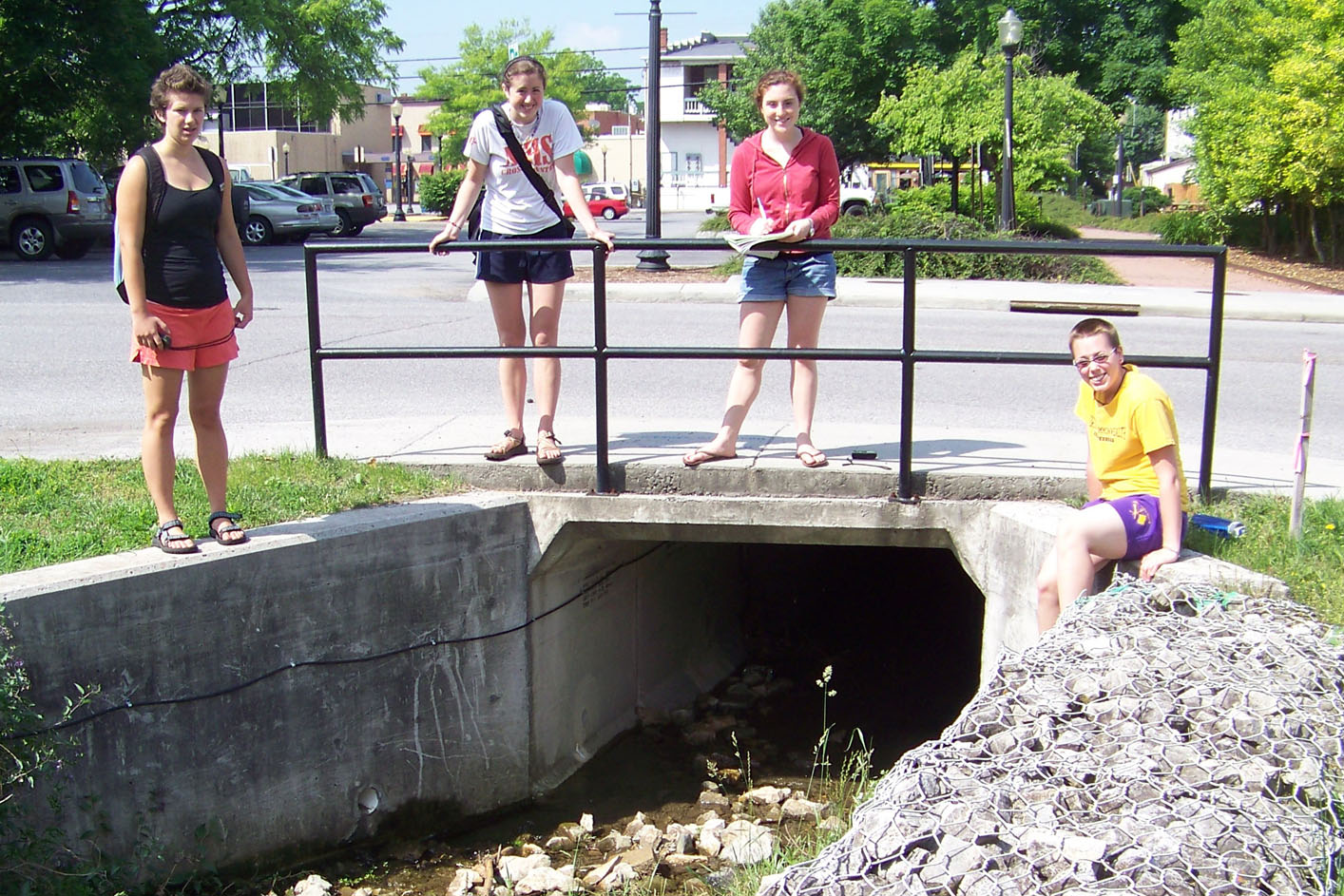
The Virginia Water Resources Research Center in Virginia Tech’s College of Natural Resources and Environment has published a history of Stroubles Creek, a waterway that runs underneath downtown Blacksburg and through the center of the Virginia Tech campus, and its watershed.
Tamim Younos of Blacksburg, Va., former associate director of the Virginia Water Resources Research Center and research professor in the Department of Geography, led a student research team in analyzing raw and historical data of the watershed. The result of their work, entitled The Stroubles Creek Watershed: History of Development and Chronicles of Research, provides a summarized history of the 9.2-mile Stroubles Creek and its surrounding watershed.
The Stroubles Creek watershed, a sub-watershed of the larger New River watershed, has been studied by researchers and students for nearly a century. Throughout the years, changes such as population increases and urbanization have drastically damaged this freshwater creek, which runs under the Drillfield and into the Duck Pond on campus. Town and campus growth, which have spurred extensive development throughout the watershed, have also contributed to a history of poor water quality in the creek.
The original intention of the project — to offer an interdisciplinary research opportunity for Virginia Tech students — has succeeded. Over 20 students have assisted Younos over the past 12 years in analyzing and compiling water quality data, field investigations, satellite imagery, and aerial photos into this comprehensive report.
“The major purpose of this project was to provide the opportunity for research and education to Virginia Tech students. A secondary goal was to provide information to the Town of Blacksburg and to Virginia Tech about problems in the watershed and how to remediate those problems,” said Younos.
Construction is currently underway to install a real-time water monitoring station on the Duck Pond inlet. “This solar-powered advanced water monitoring facility will transfer instant water flow and water quality information via the Internet to Virginia Tech classrooms and laboratories, and will capture the impact of rainfall events on Stroubles Creek flow and water quality,” explained Younos.
The College of Natural Resources and Environment and the Department of Engineering Education in the College of Engineering have worked together to implement this project. Younos has also collaborated with the Department of Biological Systems Engineering and the Town of Blacksburg on further watershed restoration projects.
Younos recently retired after nearly 30 years at Virginia Tech; almost half of his tenure was devoted to researching the Stroubles Creek watershed. He says he hopes to dedicate his retired life to global water issues and environmental sustainability.